A neurotic in lockdown
A neurotic in lockdown
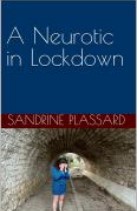 Sandrine Plassard’s book A Neurotic in Lockdown was born in an exceptional, unprecedented, and deeply destabilizing context.
I started writing this book on the very first day of lockdown, March 17, 2020, with no clear publishing plan, no structure, no strategy. I wrote out of necessity. Because the world had just shifted, and I felt that this period would be historic.
This book is not about autism, nor about a diagnosis. At that time, I knew nothing about my ADHD or my autism. I thought I was simply neurotic. And that is exactly the perspective I chose to embrace.
A testimony rooted in a historical period
The lockdown linked to the Covid-19 pandemic was an anxiety-inducing time for the entire population. But for someone already dealing with psychological distress, hypersensitivity, anxiety, and a constant need for structure, this period took on a very particular dimension.
In A Neurotic in Lockdown, I recount everything that happened in France and around the world as I perceived it, analyzed it, and felt it, day after day. Government announcements, statistics, restrictions, collective fears, contradictory messages, anxiety-driven narratives… Nothing is abstract. Everything is lived, processed, and sometimes overwhelmed by a mind in overdrive.
A book that belongs in every library
With hindsight, this book deserves a place in every library.
Because collectively, we tend to forget. To minimize. To close too quickly the darker chapters of our recent history.
Reading or rereading A Neurotic in Lockdown means going back into that period, remembering what we went through, what we felt, and what this crisis triggered within us. I do not take sides. I observe, I describe, I feel. Even though I have since formed my own opinions, this book remains intentionally a testimony, not a manifesto.
The perspective of a neurotic woman
Beyond the historical aspect, this book is also the perspective of a woman who would be labeled neurotic. A word I used at the time to try to explain how I functioned, without understanding the deeper causes.
I talk about my anxiety, intrusive thoughts, sometimes irrational fears, but also about my lucid reflections, moments of anger, dark humor, and self-derision. Lockdown acts as an amplifier: everything that was already present becomes more intense, more visible, harder to contain.
Lockdown companions
I did not go through this lockdown alone.
In this book, I also talk about the people I lived with: the tensions, the support, the misunderstandings, and the small everyday details that suddenly take on disproportionate importance.
Human relationships are tested. Personalities emerge. Fragilities too.
A disrupted daily life
Lockdown is not just about staying at home.
It is about losing structure, routines, and basic freedoms. It is about managing daily life differently: food, regulated outings, boredom, fear of illness, fear for others, fear of the future.
In A Neurotic in Lockdown, I describe this daily life with precision, sometimes with irony, sometimes with exhaustion. I put words to what many people felt without always expressing it: mental fatigue, information overload, and the feeling of being trapped in one’s own thoughts.
A mirror for readers
This book is often described as a mirror.
Many readers recognize themselves in it, even without identifying as neurotic. Because lockdown was a collective revelation. Because at some point, we all faced our fears, our contradictions, and our limits.
This book does not give lessons. It does not offer solutions. It simply tells, shows, and puts words to a raw human experience.
The starting point of a journey
Looking back, A Neurotic in Lockdown appears as the starting point of my journey as an author.
It opened the door to writing, to introspection, and to the books that followed: A neurotic confesses, Embracing autism at 56 and Empowered by autism.
At that time, I did not yet know that what I called neurosis was actually a neurodivergent functioning. This book reflects that before: the confusion, the search for understanding with the tools I had.
I also discovered my alexithymia before my autism, during one of my trainings, while studying transactional analysis during that first lockdown.
Who is this book for?
This book is particularly for:
- people who experienced lockdown as a psychological challenge
- anxious, hypersensitive, or over-adapted individuals
- readers who appreciate honest autobiographical writing
- those who want to understand how a collective event can deeply impact individuals
Where to get the book
A Neurotic in Lockdown is available through my partner Amazon.
It may also be available during book signings, depending on events.
Some links on this site may be Amazon affiliate links, which support my work as an author at no additional cost to you.
For media and interview requests
For any interview or press inquiries, please contact Sandrine via the Contact page.
FAQ – Frequently Asked Questions about A Neurotic in Lockdown
When did you write this book?
I started writing it on the first day of lockdown, March 17, 2020, in the emotional urgency of the situation.
Does this book already talk about autism?
No. At that time, I had not been diagnosed. I used the term “neurotic” to describe my functioning without understanding its underlying causes.
Is this book very anxiety-inducing?
It addresses anxiety-provoking themes because the context was, but it also includes humor, self-derision, and moments of distance.
Do you need to have struggled during lockdown to relate to this book?
No. Even those who experienced lockdown relatively well may find a different perspective and meaningful reflection.
Can this book be read after your other books?
Yes. Each book can be read independently. However, reading this one first helps understand the evolution of my personal and writing journey.